Optima Porta Porty: Programmatic SEO and Lead Generation Platform
GMK Solution built Optima Porta Porty as a scalable local SEO and lead generation platform with programmatic state/city pages, structured data, lead attribution, admin workflows, and service-area management.
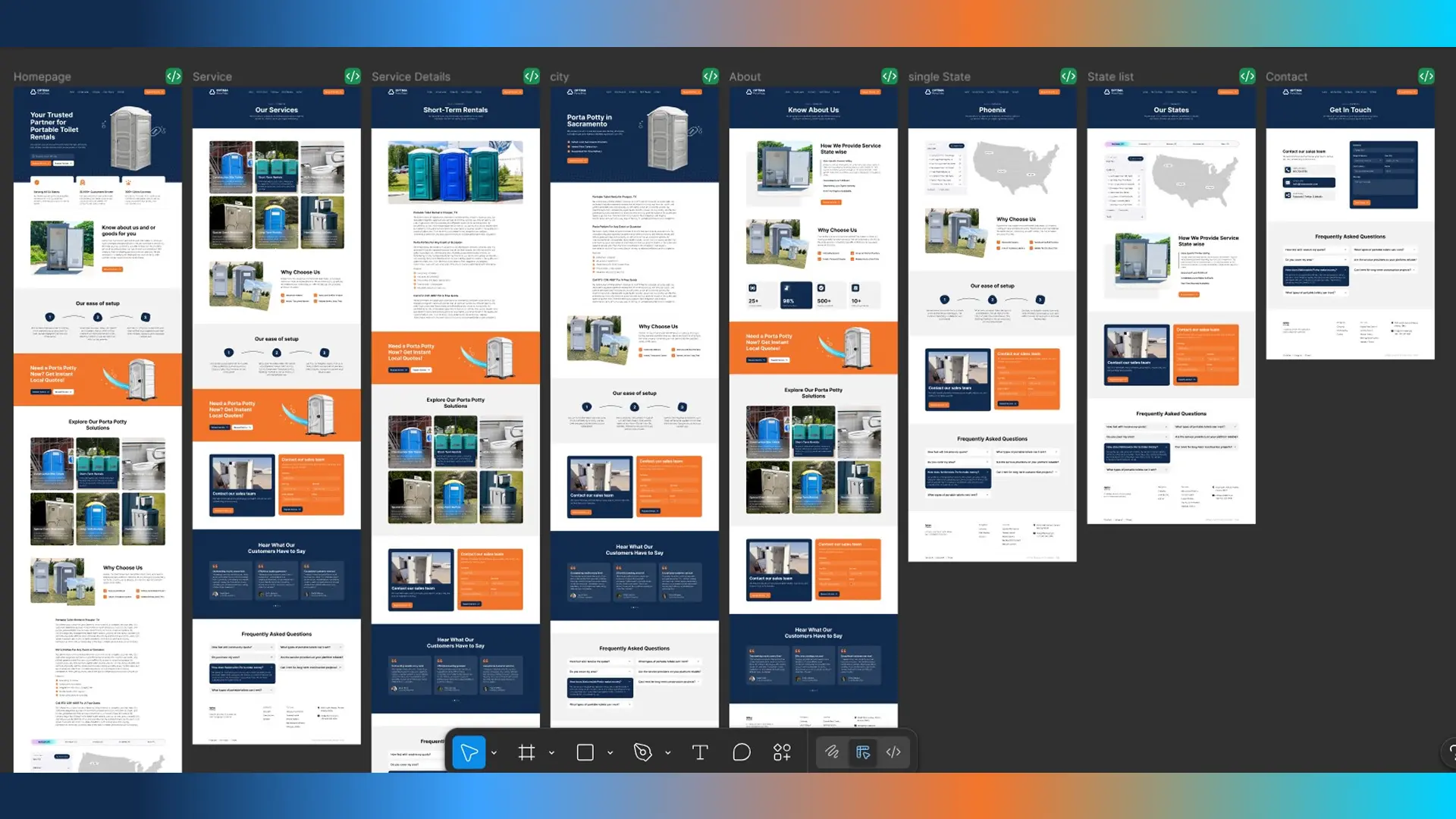
Project Overview
Building a Scalable Local SEO Platform for a Nationwide Portable Restroom Rental Brand
Optima Porta Porty needed more than a standard business website. The brand required a scalable digital platform that could support local search visibility across many service areas, capture quote requests from high-intent visitors, and give the internal team a practical way to manage locations, leads, testimonials, service content, support tickets, and site settings.
GMK Solution built a modern Next.js platform designed around local SEO, operational control, and conversion. The result is a search-ready web system that can publish state and city landing pages, generate clean structured data, manage nationwide service coverage, and route customer inquiries into admin workflows.
Project name
Optima Porta Porty
Client
Optima Porta Potty Rentals
Industry
Portable restroom rentals / local service
Market
United States
Project type
Technical SEO, Local SEO, Web Development, Lead Generation, Admin Automation
Core goal
Build a scalable lead generation platform for city, state, and service-based organic search
Platform
Next.js, React, TypeScript, Tailwind CSS, Prisma, PostgreSQL, NextAuth, Cloudflare R2, Resend/SMTP
Services Used
Technical SEO, Programmatic Local SEO, Conversion UX, and Admin Automation
The Challenge
A Local Service Category That Needs Scale, Speed, and Attribution
Portable restroom rental is a highly local, urgency-driven service category. Customers often search with location-specific intent such as "porta potty rental near me," "construction site toilet rental in [city]," or "event restroom rental in [state]." A generic homepage cannot compete effectively for those searches at scale.
- Create SEO-ready pages for states, cities, and service categories without manually coding every page.
- Support location-specific metadata, canonical URLs, schema markup, testimonials, FAQs, nearby cities, service links, and lead forms.
- Keep the site fast and manageable as the number of location pages grows.
- Capture quote requests with page-level attribution for city, state, service, and landing page visibility.
- Give admins control over cities, published/draft status, KPIs, testimonials, tickets, email accounts, and global site settings.
- Prepare the site for indexation with XML sitemaps, robots support, structured data, and metadata length controls.
- Store content and service data in a way that works on Vercel's read-only production filesystem.
Our Solution
A Full-Stack, Database-Driven Local SEO Platform
GMK Solution developed a full-stack, database-driven web platform using Next.js App Router, React, TypeScript, Prisma, and PostgreSQL. The build focused on four strategic pillars.
Programmatic local SEO
Conversion-focused quote capture
Admin-side operational control
Scalable technical infrastructure
Programmatic Local SEO
State, City, and Service Pages Built for Crawlable Local Growth
The site includes dedicated route structures for homepage, services, locations, state pages, and city pages. Each page type uses dynamic metadata, canonical URLs, Open Graph images, Twitter card data, and search-focused page copy.
Location Pages
Local Landing Pages with Content Depth and Draft Protection
City pages include:
- City-specific hero copy
- State and city breadcrumbs
- City-level structured data
- Local business schema
- Dynamic city KPIs
- Service links relevant to porta potty rentals
- Nearby city links
- Testimonials filtered by city and state
- Quote-focused call-to-action sections
- Draft/published controls to prevent unfinished pages from being indexed
State pages include:
- State-level metadata and schema
- Dynamic KPI summaries
- Featured city links
- Popular service links
- State-specific CTA sections
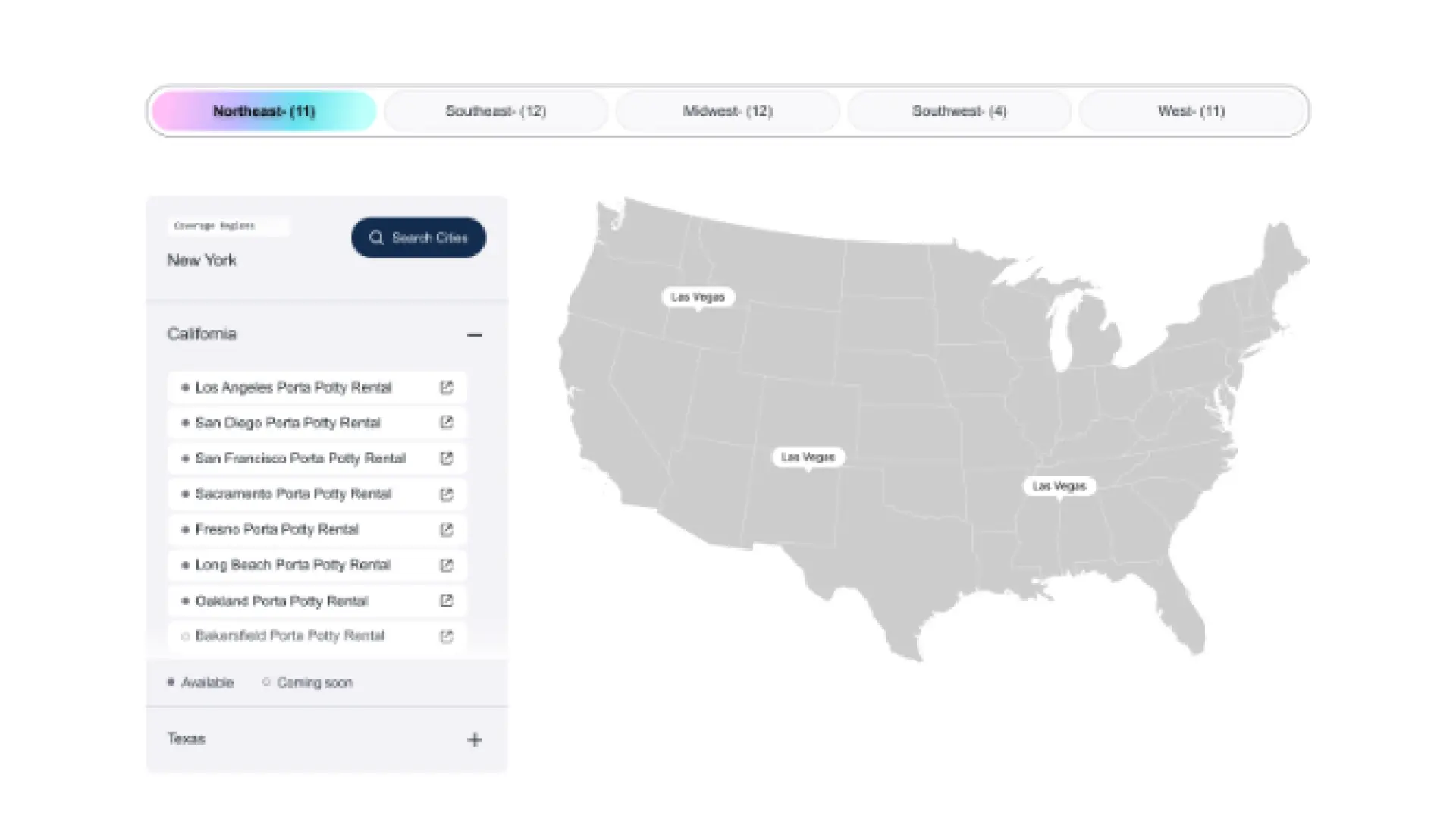
- Coverage map and service-area discovery
Structured Data
Schema and Indexation Foundations Built Into the Architecture
The sitemap system separates URLs into static, service, state, and city sitemap routes. City sitemap generation is chunked in groups of 5,000 URLs, preparing the platform for a much larger location footprint without breaking XML sitemap limits.
Service Content
8 Commercial Service Categories Built for Search and Conversion
Instead of treating service pages as simple cards, the system gives each category enough depth to target commercial-intent searches and educate visitors before they submit a quote request.
Lead Capture
Quote Requests with Page-Level Attribution
The lead form is designed for quote requests, not generic contact messages. If a user submits from a city page, state page, service page, or contact page, the system stores the source page name and source path.
- Full name
- Email address
- Phone number
- Requested service
- Site city
- ZIP code
- Project details
- Source page path
Admin Dashboard
Operational Control for Locations, Leads, Testimonials, Tickets, and Settings
The authenticated dashboard turns the site into an operating system for local SEO and inbound service requests, not just a front-facing marketing page.
- City management with search, filtering, draft/publish status, and bulk actions
- Add/edit city details, phone numbers, business addresses, and structured content
- Automatic geocode job creation when cities are published
- KPI base and growth-rate management
- Lead management with source attribution
- Testimonial management and publishing controls
- Bulk testimonial generation support
- Ticket management for customer support inquiries
- Email account management for sending replies and notifications
- Admin user management
- Global settings for phone number, business address, support hours, social links, theme colors, consent banner, GTM ID, schema business info, Open Graph images, and homepage copy
Customer Communication
Ticketing and Reply Workflows for Service Inquiries
The contact form creates support tickets with unique ticket numbers. Each ticket stores customer details, subject, source, status, priority, and message history.
- View all tickets
- Read conversation history
- Reply through the dashboard
- Send replies by email
- Update ticket status
- Track unread customer messages
Contextual testimonials support:
- Name, role, rating, title, and review text
- City, state, ZIP, city slug, state slug, and service slug targeting
- Published/unpublished status
- Auto-generated flag
- City-level and service-level filtering
- Duplicate testimonial cleanup before rendering
Technical Highlights
Production-Oriented Infrastructure for SEO, Content, and Operations
- Built with Next.js 16, React 19, TypeScript, and Tailwind CSS.
- Database-backed location architecture using Prisma and PostgreSQL.
- Programmatic state and city page generation with draft protection.
- Reusable schema builders for LocalBusiness, Service, Place, CollectionPage, ItemList, Breadcrumb, Organization, Website, and FAQ markup.
- Segmented sitemap generation for static pages, services, states, and city chunks.
- Lead attribution that records source page path and readable source page name.
- Admin-authenticated dashboard with city, lead, testimonial, ticket, email, admin, and settings management.
- Cloudflare R2 content persistence with local fallback.
- Automated ZIP import and city-to-ZIP linking workflow.
- Geocode job queue for city coordinate quality.
- Dynamic KPI system with seeded base values and configurable growth rates.
- Global theme and contact settings managed from the database.
Measurable Build Outcomes
Concrete Assets Delivered in the Platform
- 8 commercial service categories prepared for SEO landing pages.
- ZIP import workflow capable of processing 40,000+ US ZIP records from the zips dataset.
- City sitemap architecture chunked at 5,000 URLs per file for future scale.
- Authenticated dashboard covering leads, cities, testimonials, tickets, admins, settings, and summary metrics.
- Structured data coverage across homepage, services, locations, states, cities, breadcrumbs, and local business entities.
Why This Matters for SEO
Local Relevance, Stronger Page Quality, and Technical SEO by Default
- Each state and city page can carry its own metadata, content, schema, breadcrumbs, service links, testimonials, and internal links.
- The platform avoids thin-page patterns by combining local context, service options, FAQs, trust signals, KPIs, and nearby city navigation.
- Metadata, canonicals, schema, sitemaps, draft protection, and internal linking are part of the page architecture from the start.
SEO Strategy Highlights
Semantic SEO, Keyword Targeting, Schema, and Crawlability
Semantic themes covered
Keyword layers
- Homepage: national and brand-level porta potty rental terms.
- Service pages: construction toilet rental, event restroom rental, ADA porta potty rental, handwashing station rental, and holding tank rental.
- State pages: state-level service-area terms.
- City pages: local high-intent terms such as porta potty rental in [city], [state], portable toilet rental in [city], and event restroom rental near [city].
Operations Value
The Business Team Can Manage Fast-Moving Local Service Data
For the business team, the biggest value is control. Admins can publish or draft cities, update phone numbers, change global site settings, review leads, manage testimonials, respond to tickets, and monitor dashboard summaries without asking a developer to edit code for every small update.